

Under Pressure: Why Your Building’s Pipes Might Be a Ticking Time Bomb
We’ve all heard the old saying that “bigger is better.” In building services, that usually translates to more capacity, more power, and more pressure. But in hydraulic engineering, “more” isn’t always your friend. In fact, an over-pressurised system is often a silent liability – one that’s just waiting to make a very loud (and very expensive!) entrance.
Over the years, the team here at n2 has been called in to investigate several nasty property damage cases across Sydney. We’re talking about serious water ingress caused by Pressure Reducing Valve (PRV) failures. When we looked into the “why” behind these leaks, we found a frustratingly common pattern: much of the damage could have been avoided entirely if the system hadn’t been pushed so hard at the source.
The Problem with the “Mechanical Band-Aid”
Think of PRVs as the bouncers of your building’s water system. Their job is simple: catch high-pressured flows and drop that pressure down to a safe level for your taps, showers, and appliances.
But there’s a catch. PRVs are mechanical. They’re made of moving parts, diaphragms, seals, and springs that live their lives under constant, high-intensity stress. When you put them in high-pressure environments, the physics of water (things like cavitation and turbulence) starts to eat away at those components. They get tired. Seals degrade, and eventually, they leak.
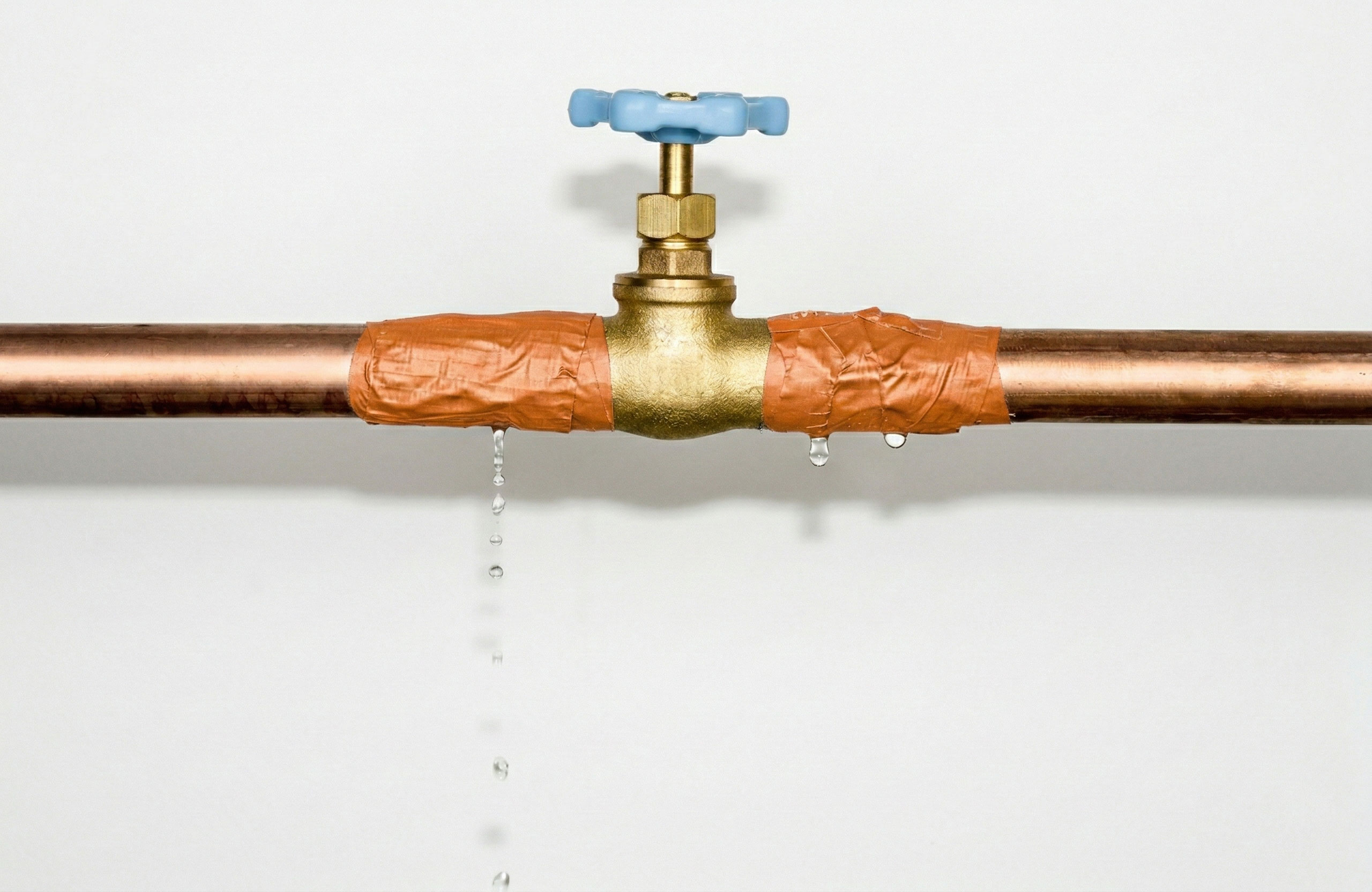
These aren’t set and forget gadgets. They need a strict maintenance schedule to stay useful. A PRV failure is often a “quiet quitter”; when the diaphragm and seat or disc wear out, or a spring fails, high-pressure water can bypass the PRV entirely. This sends a surge downstream that damages fixtures and can lead to significant flooding before anyone even notices there’s a problem.
The n2 Insight: Designing Out the Risk
When we investigate a leak, we don’t just look at the broken valve; we look at the original design. Often, we find that a building is relying far too much on these secondary PRVs to fix a system that was just given too much pressure from the start. We see pumps that are oversized for worst-case scenarios that never actually happen, leaving the system to run at dangerously high levels every single day.
If the pressure is balanced and specified correctly at the start – whether it’s coming from the town mains or a booster pump – you can actually get rid of many of these sub-station PRVs. By fixing the pressure at the root, you remove dozens of potential fail-points.
Why over-pressurising costs you more:
- High Upfront Costs: You’re paying for “gold-plated” gear you don’t need. This includes heavier-duty pumps, high-pressure rated pipes, and specialised fittings just to handle the extra load.
- A Never-Ending Maintenance List: Every PRV you add is another line item on your yearly budget. In high-rise buildings, these need constant testing and part replacements. Smart design cuts that ongoing cost right down.
- A Bigger Mess When Things Go Wrong: High pressure puts 24/7 strain on every joint and flexible hose in the building. A small leak that might be a nuisance at low pressure becomes a catastrophic flood when the system is pushed to its limit.
A Word from Nathan Fu
“Good engineering isn’t about adding more parts to solve a problem; it’s about having the fewest moving parts possible,” says Nathan Fu, Managing Director at n2.
“True reliability comes from looking at the pressure itself, rather than just installing band-aids. We’ve seen the mess that happens when a design relies too heavily on hardware that eventually wears out. Often, the most reliable valve is the one you never had to install because the system was balanced correctly from day one.”
Reliability Through Simplicity
At n2, we live by a simple rule: “Do it once and do it well.” We spend the time upfront during the design phase to make sure system pressures are optimised for real-world use, not just maxed out for the sake of it. This “source-first” approach helps our clients cut their long-term risk before a single pipe is even laid.
We don’t just want a system that works on day one; we want a building that stays quiet and dry for the next twenty years.
Concerned about the pressure levels in your current project?
Get in touch with the n2 team for a technical review. Let’s design out the risk before it becomes a liability.