

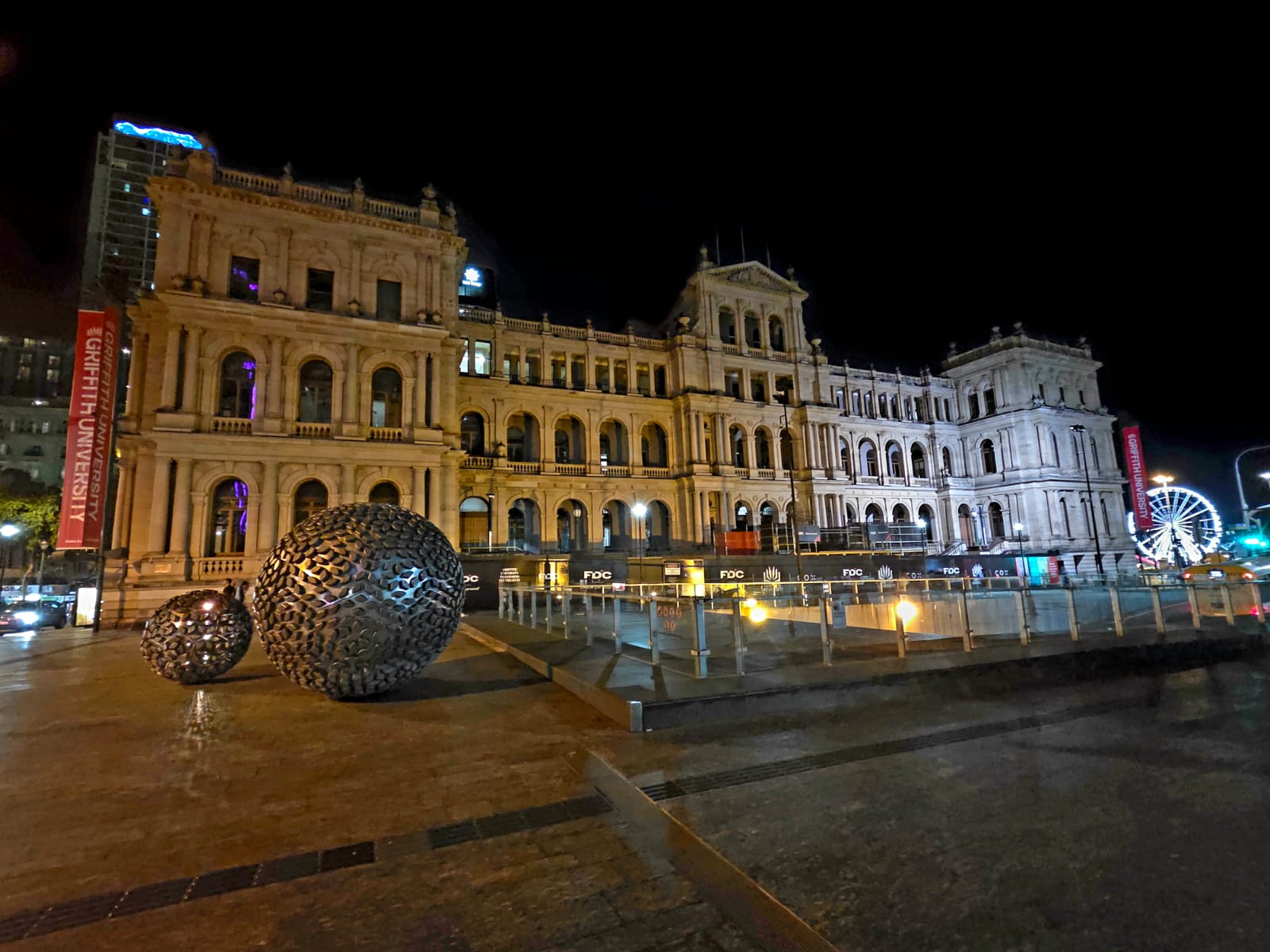
Brisbane’s Treasury Building: Engineering a Modern Campus Within a Heritage Masterpiece
It is not every day you get to work on a building that spans an entire CBD block. It is even rarer when that building is a magnificent Italian Renaissance masterpiece that has stood as a gateway to a city for well over a century.
Brisbane’s heritage-listed Treasury Building – bordered by Queen, William, George, and Elizabeth streets – is currently undergoing one of its most significant chapters yet. Designed by the renowned Queensland Colonial Architect John James Clark and built in three stages between 1886 and 1928, this landmark is being transformed from its recent life as the Conrad Treasury Casino (1995–2024) into a vibrant new city campus for Griffith University (GU).
At n2 Engineering Consultants, we are proud to be consulting on the hydraulic services design for this extraordinary transformation. Working on a site with a history dating back to 1825 (when it was originally reserved for convict-built military barracks) is an incredible privilege, but it also comes with some of the most technical building services challenges we have ever encountered.
Here is a look behind the heritage facade at how we are helping to bring this historic icon into the future.
The Challenge: High-Spec Services with Zero Footprint
Modern university campuses require top-tier hydraulic, ventilation, and power systems. However, when the building in question is a heavily protected heritage site, you cannot simply core-drill a new pipe run or bolt heavy brackets wherever you please.
Our engineering work on the Treasury Building has required us to solve several unique heritage and operational puzzles:
1. Minimising the Impact on Heritage Fabric
The building’s famous facade, roofline, and internal structural elements are under strict conservation guidelines. Any new pipework, brackets, support structures, or penetrations must be designed with extreme care. Our goal is to minimise the impact on the existing building fabric to the absolute greatest extent possible. Every single connection point has to be engineered to distribute loads safely without damaging historical stonework.
2. The Surgical Demolition and Reuse of Hydraulics
Rather than pulling everything out and starting fresh, the sustainability and structural constraints of this project require us to reuse as much of the existing hydraulic infrastructure as we can.
This has meant getting our hands dirty with detailed, on-site forensic investigations. We have had to trace and verify the actual condition and routing of century-old pipework hidden deep within the structure. From there, we developed a staged implementation strategy that maximises the retention of the existing infrastructure while ensuring it can handle the demands of a high-traffic university campus.
3. Managing High-Stakes Live Operations
Because this site is transitioning in stages and borders active high-density commercial areas, we have had to design highly coordinated temporary drainage arrangements.
This is crucial to prevent any risk of sewer surcharge, backflow, or service interruptions during the construction phase. We have undertaken a thorough assessment of the existing main drainage network’s capacity and flow characteristics to ensure the transition from the old casino layout to the new university campus runs completely smoothly.
4. The Battle for Void Space
The Treasury Building’s grand, historic ceilings are protected elements, which means they cannot be altered. The space inside the ceiling voids is highly restricted. This has required our BIM and engineering teams to work in lockstep, coordinating our hydraulic systems with mechanical, electrical, and fire services down to the millimetre.
5. Exceeding the Standards for Griffith University
While minimum code compliance is always our baseline, Griffith University has its own strict guidelines, operational preferences, and performance expectations. Our design team has worked hard to ensure that every drop of water, drainage run, and fixture does not just pass local building codes, but aligns perfectly with GU’s vision for a resilient, low-maintenance, and highly efficient city campus.
Engineering the Future, Respecting the Past
The Treasury Building transformation is currently in progress, and the n2 team is fully focused on delivering a world-class educational space that respects Brisbane’s rich history.
This project is a perfect example of the n2 difference: we do not just rely on standard templates. We get on-site, trace the pipes, understand the heritage, and design custom solutions that protect the building’s character while preparing it for thousands of future students.
Keep an eye out for more updates as this landmark project progresses.
Want to learn more about our experience with heritage retrofits and complex commercial designs? Reach out to the n2 team today.
